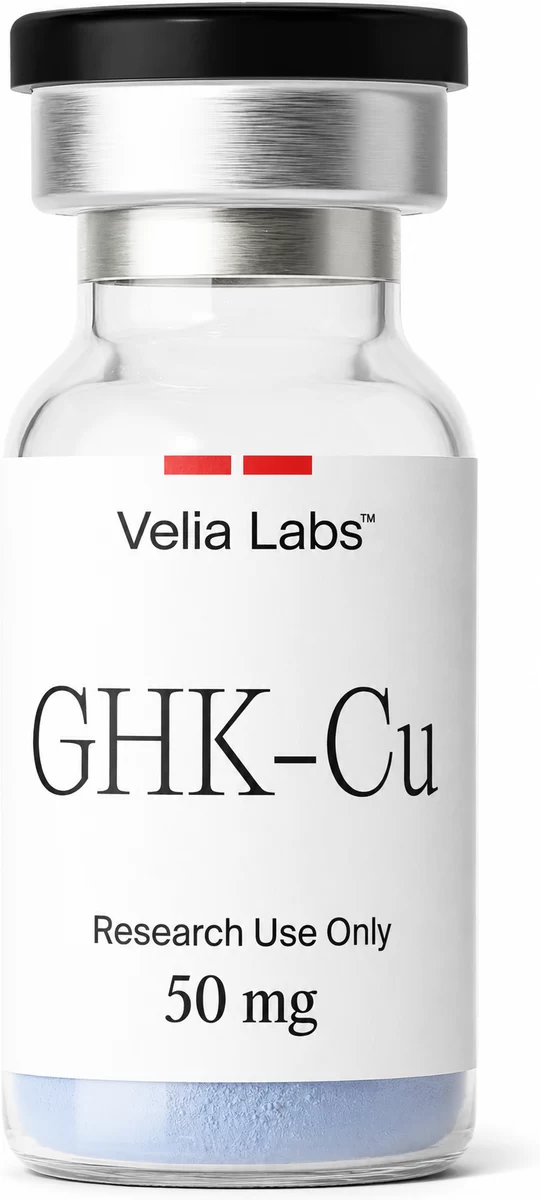
GHK-Cu 50mg
For in vitro research only
ANALYSIS STATUS DETAILED BELOW
44,99 €
In stock
SIZE
Quantity
1
Free shipping from 300 €
Preparation usually within 1 to 2 business days
Secure payment
For in vitro research only
ANALYSIS STATUS DETAILED BELOW
44,99 €
In stock
SIZE
Quantity
Free shipping from 300 €
Preparation usually within 1 to 2 business days
Secure payment

Technical specification
All listed values are reference values for research use only. This product is not intended for human, food, therapeutic or diagnostic use. For laboratory research by qualified personnel only.
Each vial is intended for laboratory research use only — not for human, veterinary, food or diagnostic use.
GHK-Cu is a copper-binding tripeptide complex studied in laboratory research focused on extracellular-matrix and skin-fibroblast models. Researchers use it to investigate copper-peptide chemistry, formulation behavior, and analytical characterization. Supplied for research use only.
Independent Janoshik third-party report in progress for this batch.
Before selecting a reference, distinguish the chemical specification, the batch identity and the results actually available. The vial quantity is a raw-material format, not a dosing recommendation. Published research does not certify the contents of a supplied batch.
GHK-Cu (also written GHKCU or copper tripeptide-1) is not the same chemical form as free GHK. Reference masses depend on the represented species; check the documented salt, composition and identity of the batch.
Your cart is empty.
Continue shopping